Check Engine Light Diagnostics in Boca Raton, FL
A code tells you which circuit complained. It does not tell you why. We are paid to find the difference.
Find the cause, not just the code
A check engine light is the only sentence your car can say, and it uses the same words for a loose gas cap and a misfire quietly destroying a catalytic converter.
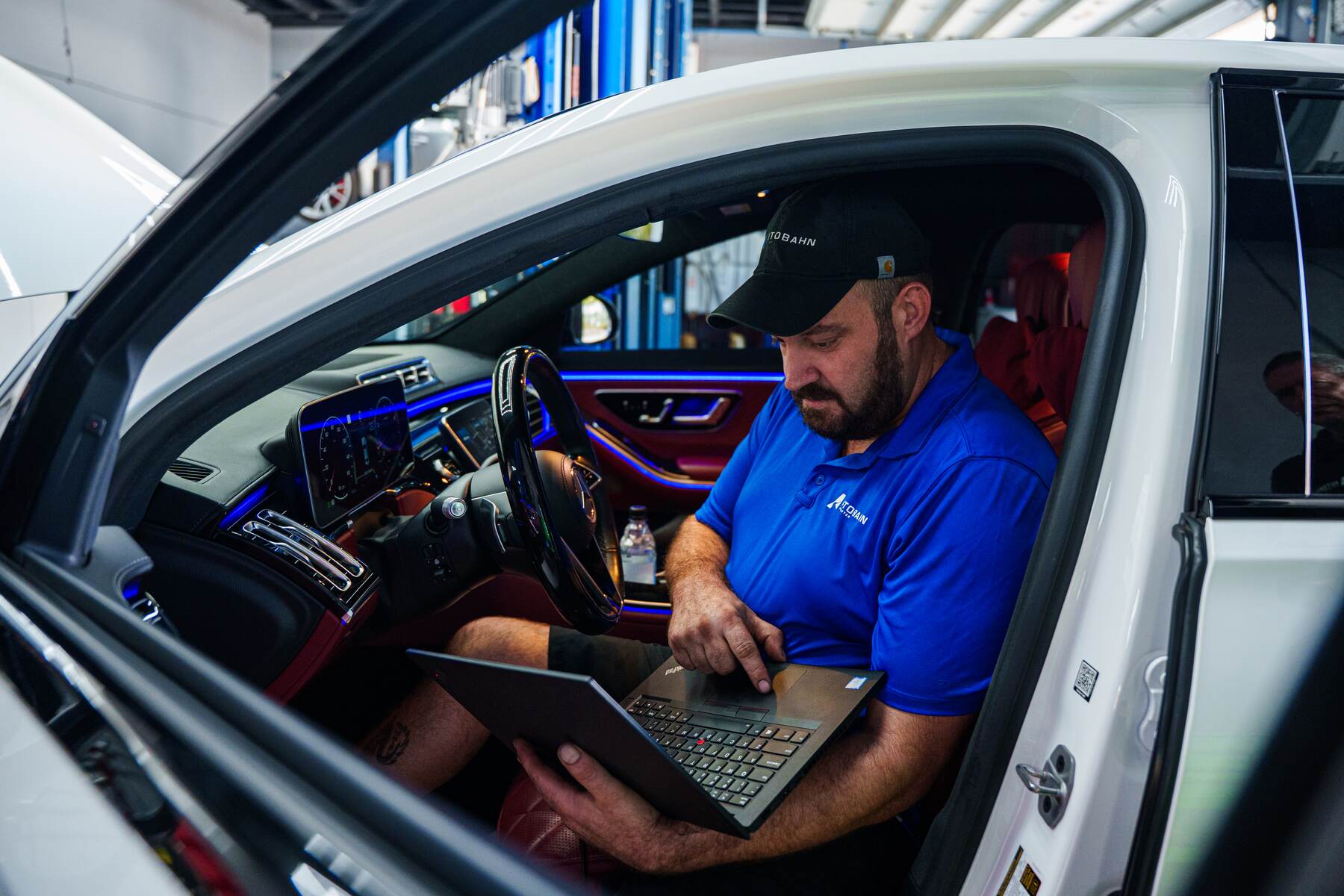
Parts-store readers hand you a number. We run manufacturer-level software on the car’s own modules, read live data and freeze-frame conditions, and trace the code to the component actually at fault before recommending anything. You get a written finding: what failed, why, what it costs, and what can safely wait.
Steady or flashing changes the urgency
A steady light means the computer has logged a fault that needs attention soon. Drive gently and book a diagnostic. A flashing light means an active misfire is likely dumping raw fuel into the catalytic converter, and that is the one where a two-hundred-dollar repair becomes a two-thousand-dollar one over the course of a single drive home. Reduce speed and get to us, or call and we will arrange towing.
Why the generic reader is not enough
A generic tool reads the small set of emissions codes every manufacturer must publish. It cannot see the manufacturer-specific codes, cannot read most modules, cannot run an actuator test, and cannot perform the coding a repair often needs afterwards. On a European car that is most of the picture missing.
What we diagnose every week
- Oxygen and air-fuel sensor faults, the most common trigger by a distance and a quiet thief of fuel economy.
- Ignition coils and spark plugs, throwing misfire codes, especially on higher-mileage German engines.
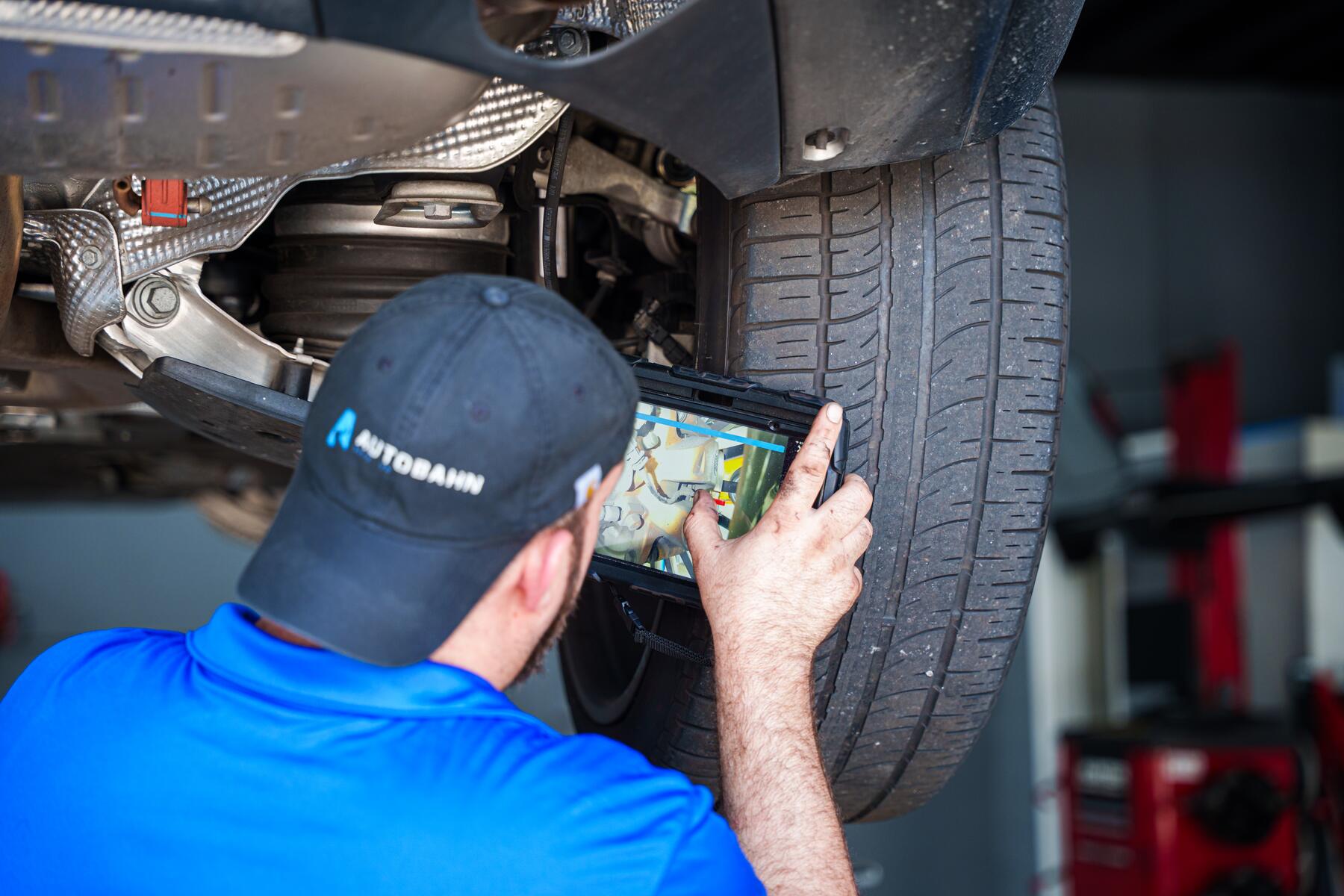
- Evap system leaks, which run from a gas cap seal all the way to a purge valve, and are found with a smoke test rather than a guess.
- Catalytic converter efficiency codes, which are usually the symptom of something upstream and almost never a reason to start with the converter.
- Vacuum and boost leaks, which make a car feel flat and confuse the fuel trims into blaming a sensor.
- Module and network faults, traced across CAN to the unit actually at fault rather than the one loudest in the log.
What a real diagnosis looks like.
The reason people pay twice for the same fault is almost always that somebody read a code and bought the part named in it. The code names a circuit. It does not name a culprit.
A code is a symptom with a number on it
P0171 says the engine is running lean on bank one. It does not say whether that is a failing sensor, a vacuum leak, a dirty mass airflow meter, a weak fuel pump or a cracked intake boot. Replacing the oxygen sensor because the code mentions oxygen is the single most common way money gets wasted in this industry, and the light comes back within a week.
Freeze-frame data is where the answer usually is
When a fault sets, the computer photographs the conditions: engine speed, load, coolant temperature, fuel trims, vehicle speed. A fault that only sets cold at idle and a fault that only sets hot under load are entirely different problems wearing the same code. Reading that frame takes a couple of minutes and routinely saves a couple of hundred dollars.
Fuel trims tell you what the engine is compensating for
Short and long-term fuel trim show how far the computer is having to move from its baseline to keep the mixture right. A car with a big positive trim at idle that returns to normal at speed is telling you it has a vacuum leak, without ever setting a code for one. That is the kind of thing a generic reader cannot show you and a live data session shows you in seconds.
Some repairs are not finished until the car is coded
Fit an injector on a modern BMW and it needs coding to the DME by index. Fit a control unit on a Mercedes and it needs SCN coding online. Clear a fault without performing the adaptation and the car will run, then set the light again a few hundred miles later. We hold the tools and the access for that final step, which is why the fix stays fixed.
What you’re paying for, line by line
The parts of this job that never appear on an invoice are the ones that decide whether it holds.
Manufacturer-level software on the car’s own modules
Trace the code to the actual cause before quoting
Live data and freeze-frame conditions read and interpreted
Smoke tested to find where it actually leaks
Every module on the network, traced across CAN
Coding and adaptations performed so it stays off
Written: what failed, why, cost, and what can wait
Six years, unlimited miles on qualifying repairs
From drop-off to drive-out
Five steps, and you know what you are getting at the end of each one.
Book it, or just drop it off
Call, text, or book online. After-hours drop-off if that suits you better, and a free local shuttle so you are not sitting here waiting on us.
We look before we quote
Factory-level software on every module, live data and freeze-frame conditions, and a smoke test or actuator test where the fault calls for one.
You get it in writing first
An itemized estimate with parts and labor separated, and what can wait flagged separately from what cannot. Nothing is touched until you approve it.
The work, done to specification
The repair the diagnosis actually points at, then the coding and adaptations that finish it, so the light does not come back a month later.
Six years, unlimited miles
Qualifying repairs carry our parts and labor warranty, it transfers if you sell the vehicle, and every visit is logged so the service history stays intact.
What it costs
Diagnostic time is the one thing we charge for honestly rather than hiding in a parts markup. Some faults are twenty minutes and obvious. Some are an intermittent electrical fault that takes three hours to reproduce, and pretending otherwise is how shops end up guessing to stay inside a quoted number.
We quote the diagnostic up front, and if the repair goes ahead with us that time is credited against the job. You get a written finding either way, so even if you take it elsewhere you are not paying us for nothing.

Backed for 6 years / unlimited miles
Parts and labor, on every qualifying repair, and it transfers to the next owner if you sell the vehicle.
Check Engine Light Diagnostics FAQs
If it is steady, briefly and gently, but do not leave it. A steady light means something is logged and unaddressed, and a fair number of the expensive repairs we do started as a steady light somebody drove on for a year. If it is flashing, stop driving normally and get it looked at today.
Because reading the code takes thirty seconds and finding the cause is the actual work. That free reading gives you the same number we would see, and it is genuinely useful information. What it does not do is tell you which of the six or seven possible causes is yours, which is what you are actually trying to buy.
Yes. If you go ahead with the repair here, the diagnostic time comes off the job. If you decide not to, you still leave with a written finding explaining what we found and what it will take to fix.
Not necessarily. Many faults only set the light after failing a test on several consecutive drives, and switch it off again when the condition passes. The stored code and the freeze-frame data are still in memory, and that history is worth reading before you assume it fixed itself.
Yes. The diagnostic discipline is the same, and we hold tooling for domestic and Asian vehicles as well. See our domestic and import repair page.