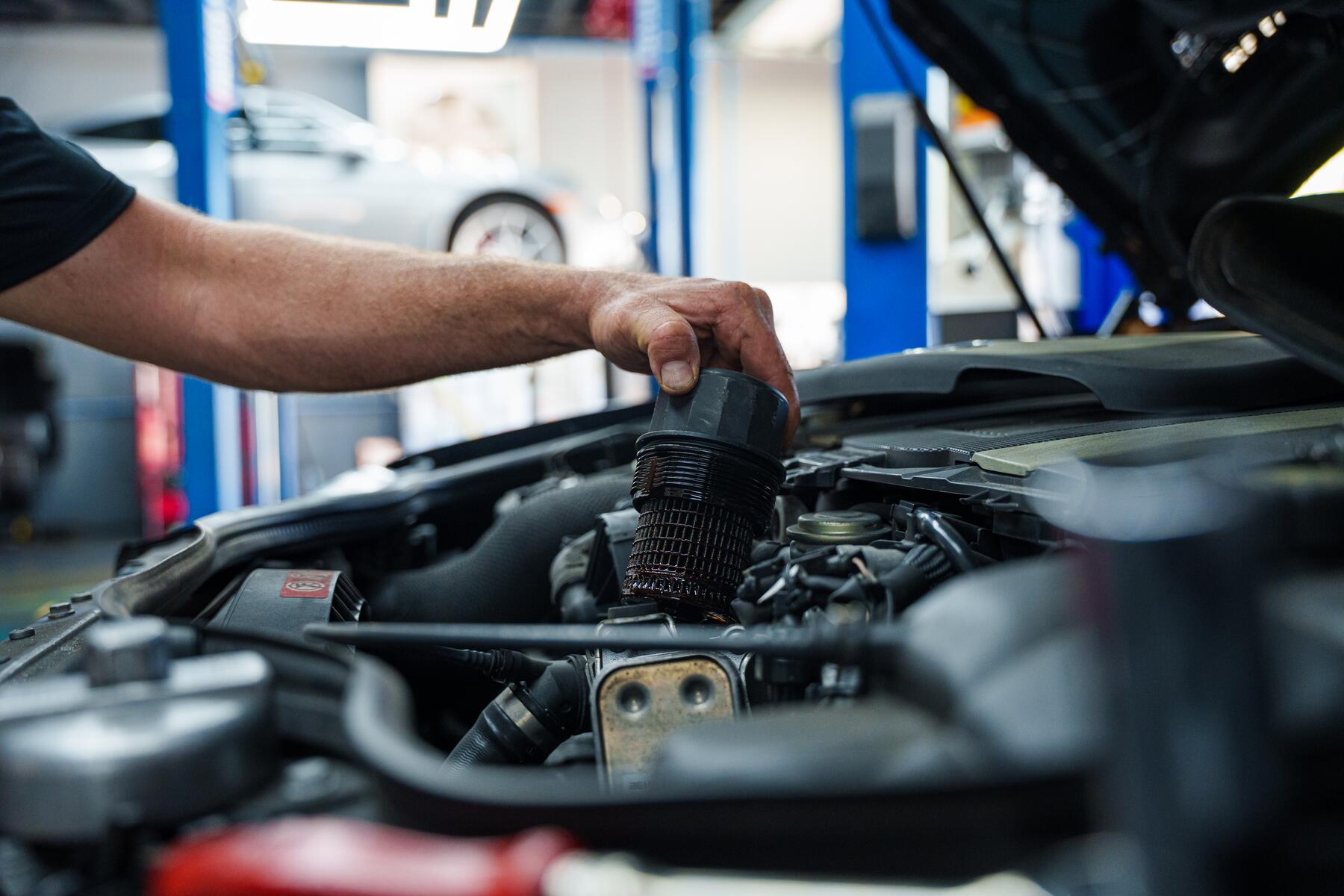
Car A/C Repair in Boca Raton, FL
In Boca Raton air conditioning is not a comfort feature. It is survival equipment eleven months a year.
Climate control that works in August
Almost every A/C job that comes back came back because somebody added refrigerant to a system that was leaking and called it a repair.
We find the leak first, fix it, then evacuate the system and recharge it by weight rather than by pressure gauge. That is slower and it is the only way the repair lasts more than a season in this climate.
What we handle
Full system inspection and performance testing, leak detection with dye and electronic sniffer, evacuation and recharge to the manufacturer’s specified weight, compressor and clutch replacement, condenser and evaporator work, expansion valve and drier replacement, heater core inspection, blower motor and resistor repair, and climate control module faults where the temperature, fan speed or air distribution has a mind of its own.
Heating, too, occasionally
It gets cold enough here often enough to matter, and a heater that blows cold is usually a coolant level, a thermostat stuck open, or a heater core starting to block. It is also sometimes the first honest sign of a cooling system problem that has nothing to do with comfort, which is worth catching.
What brings A/C in
- Cold at speed, warm at idle, which usually points at condenser airflow or a cooling fan rather than refrigerant.
- Gradually getting less cold over a season or two, which is a leak, because a sealed system does not consume refrigerant.
- A musty smell on start-up, from biological growth on a damp evaporator, and worth treating properly rather than masking.
- Weak airflow at every setting, commonly a blocked cabin filter or a failing blower motor.
- Fan speeds that work only on high, the classic blower resistor or final stage unit failure.
- One side hot, one side cold on dual-zone systems, usually a blend door actuator rather than the A/C at all.
What an A/C job done properly looks like.
A/C is the service most often done badly, because a can of refrigerant makes a car cold for a few weeks and by the time it is warm again the customer blames the weather.
A system that needs refrigerant has a leak, full stop
Air conditioning is sealed. It does not consume refrigerant the way an engine consumes oil. If it is low, it is leaking, and topping it up is treating the symptom while the compressor runs short of the oil that circulates with the refrigerant. That is how a hundred-dollar leak becomes a compressor. We dye it, run it, and find where it is actually going.
Charged by weight, not by gauge
Modern systems hold a small, precisely specified charge, and the tolerance is tight enough that a few ounces either way costs you real cooling. The only correct method is to evacuate the system completely, hold vacuum to prove it is sealed, and then charge the exact weight the manufacturer specifies. Charging until the gauge looks right is guessing with expensive equipment.
The vacuum is not just about air, it is about water
Pulling and holding a deep vacuum boils moisture out of the system. Moisture left inside combines with refrigerant and oil to form acid, which corrodes the system from the inside and kills compressors slowly. That hold time is not padding on the invoice. It is the difference between a repair and a delay.
Warm at idle is usually not an A/C fault
If it blows cold on the highway and warm sitting in traffic, the refrigerant side is often fine and the problem is heat rejection: a blocked condenser, a failing cooling fan, or a fan control module. Diagnosing that as low refrigerant and adding gas overcharges a healthy system and makes it worse. This is one of the most common misdiagnoses we correct.
What you’re paying for, line by line
The parts of this job that never appear on an invoice are the ones that decide whether it holds.
Leak found first, then repaired, then recharged
Evacuated and charged by weight to spec
Held, to prove the seal and boil out moisture
Diagnosed as condenser or fan airflow
Evaporator treated and the cabin filter replaced
Replaced with the drier, and the system flushed
Photographed and priced before you decide
Six years, unlimited miles on qualifying repairs
From drop-off to drive-out
Five steps, and you know what you are getting at the end of each one.
Book it, or just drop it off
Call, text, or book online. After-hours drop-off if that suits you better, and a free local shuttle so you are not sitting here waiting on us.
We look before we quote
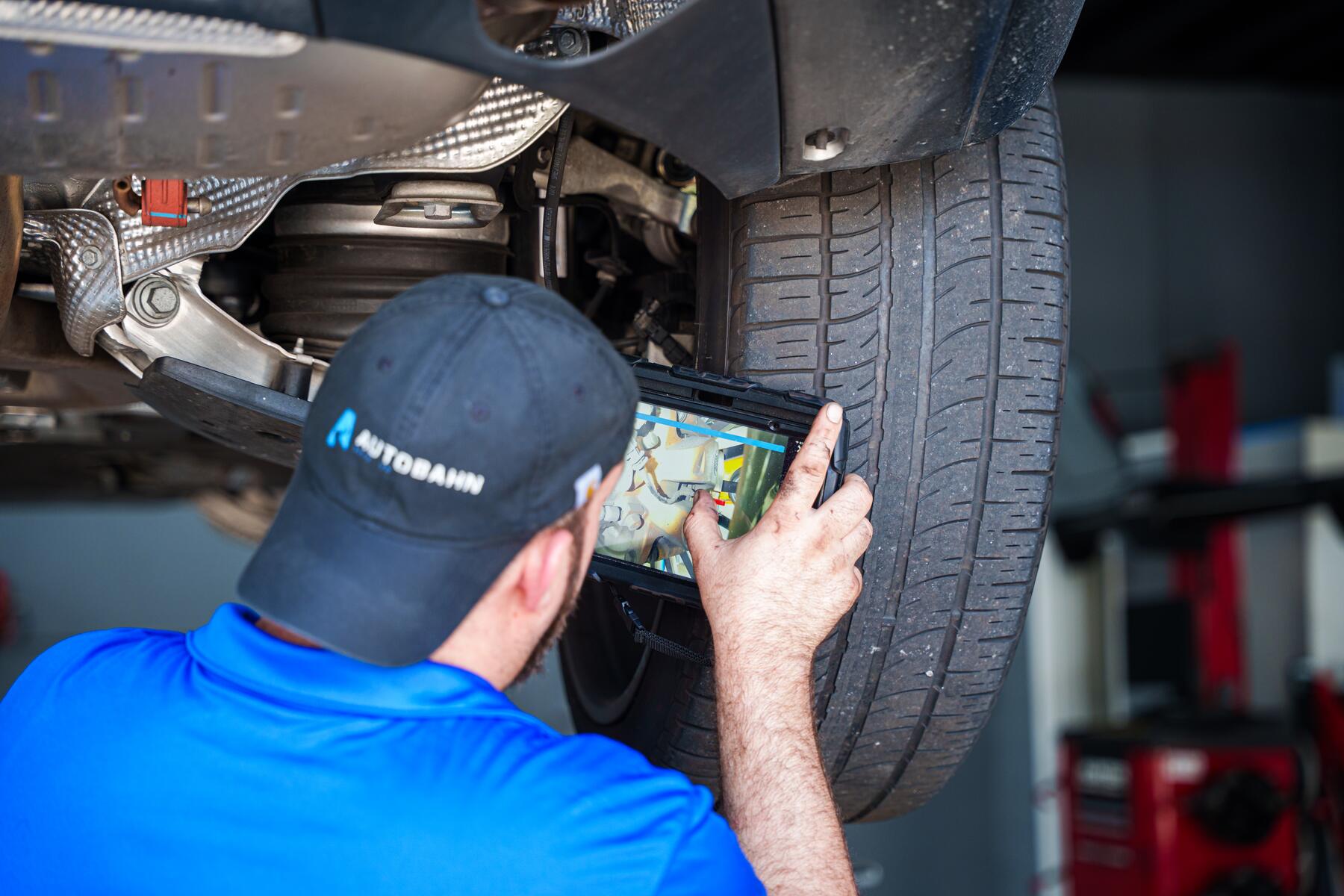
A full performance test with vent temperatures and pressures recorded, plus dye and electronic leak detection rather than an assumption that it just needs gas.
You get it in writing first
An itemized estimate with parts and labor separated, and what can wait flagged separately from what cannot. Nothing is touched until you approve it.
The work, done to specification
The leak repaired, the system evacuated and held under vacuum, then recharged to the manufacturer’s specified weight with the correct oil.
Six years, unlimited miles
Qualifying repairs carry our parts and labor warranty, it transfers if you sell the vehicle, and every visit is logged so the service history stays intact.
What it costs
A/C pricing depends entirely on where the leak is. An O-ring or a service port valve is a modest repair. A condenser sitting in front of the radiator is more. An evaporator buried behind the dashboard is a day of labor before any part is fitted, and it is worth knowing which one you have before you commit.
So we find the leak first and quote the actual repair, with parts and labor separated. If the honest answer is that the repair costs more than the car warrants, we will tell you that too.
Backed for 6 years / unlimited miles
Parts and labor, on every qualifying repair, and it transfers to the next owner if you sell the vehicle.
Heating & A/C FAQs
We can, but if it needs one it is leaking, because the system is sealed and does not use refrigerant up. We would rather find the leak first so you are not back in six weeks. If you want a recharge anyway we will tell you honestly how long it is likely to last.
That is usually heat rejection rather than refrigerant. At speed there is plenty of air through the condenser; at idle the cooling fan has to do that work. A blocked condenser, a failing fan or a fan control fault all produce exactly this symptom, and adding refrigerant makes it worse.
Condensation on the evaporator core that never fully dries, which lets biological growth take hold in the housing. A cabin filter change plus a proper evaporator treatment deals with it. An air freshener does not, it just moves the problem downstream of your nose.
A performance test and leak detection is usually the same day. If dye is needed to find a slow leak, we may ask you to drive it for a few days and bring it back so we can look under a black light, which is the difference between finding the leak and guessing at it.
Qualifying repairs carry our six-year, unlimited-mile parts and labor warranty and it transfers with the car. Refrigerant itself is a consumable, so we will be clear on what is covered before we start.