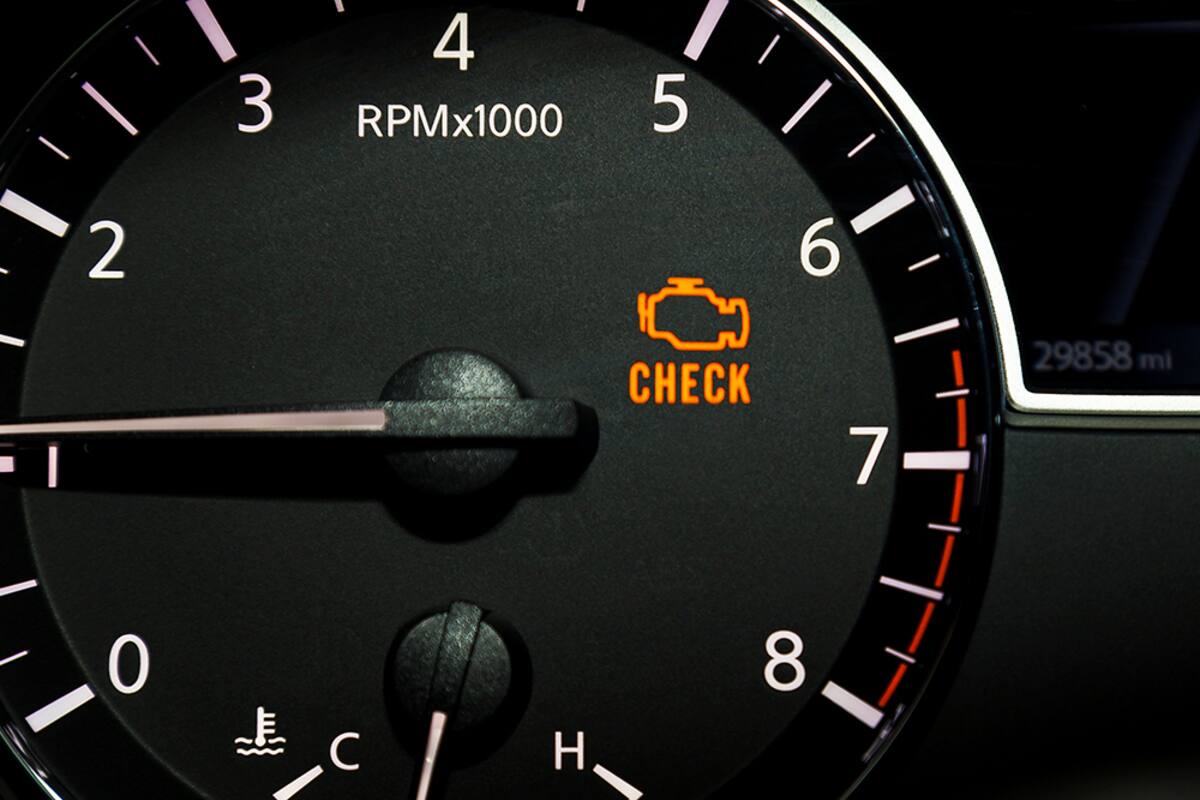
The check engine light is the only sentence your car can say, and it uses the same words for a loose gas cap and a misfire quietly destroying a catalytic converter. Here is how to tell which one you are dealing with.
Steady or flashing changes everything
Steady: the computer has logged a fault that needs attention soon. Drive gently and book a diagnostic.
Flashing: an active misfire is likely dumping raw fuel into the catalytic converter. This is the one where a two-hundred-dollar repair becomes a two-thousand-dollar one over a single drive home. Reduce speed and get it looked at today.
How the system actually works
Your car runs dozens of self-tests continuously, comparing sensor readings against what the engine computer expects. When a reading falls outside range often enough, it stores a code and turns on the light. Many faults only illuminate after failing on several consecutive drives, which is why a light can appear long after a problem started.
What we find most often
- Oxygen and air-fuel sensors — the most common trigger, and a quiet thief of fuel economy
- Ignition coils and plugs — misfire codes, especially on higher-mileage German engines
- Evap leaks — anywhere from a gas cap seal to a purge valve, found with a smoke test
- Vacuum and boost leaks — the car feels flat and the fuel trims blame a sensor
- Catalytic converter efficiency — nearly always a symptom of something upstream
Why the code is not the answer
A code names a circuit, not a culprit. P0171 says the engine is running lean on bank one. It does not say whether that is a failing sensor, a vacuum leak, a dirty air meter, a weak fuel pump or a cracked intake boot.
Replacing the part named in the code is the single most common way money gets wasted in this trade, and the light comes back within a week.
It went off by itself. Am I fine?
Not necessarily. Many faults switch the light off again once the condition passes, but the stored code and the freeze-frame data, a snapshot of exactly what the engine was doing when the fault set, are still in memory. That history is worth reading.
What a proper diagnosis looks like
Factory-level software on the car's own modules, live data, freeze-frame conditions, and a smoke test or actuator test where the fault calls for one. You get a written finding: what failed, why, what it costs, and what can safely wait.
See check engine light diagnostics, or call (561) 392-1910.